What the Deliveroo relationship actually looks like for delivery-only food brands
One Northwest London restaurant operator is averaging £3,500-£4,000 per week on Deliveroo, across around 200 orders (UK Business Forums). That is not the ceiling. It is a real, mid-tier outcome from someone running a live operation in a competitive city market.
Most content about Deliveroo and dark kitchens stays at the surface: commission rates, setup steps, a few stats. This piece goes deeper. It covers how the algorithm actually treats new listings, what Deliveroo Editions does and does not offer, where commission really lands once discounts and fees are factored in, and what operators across the UK are generating in weekly revenue figures.
Dish’d partners are covered specifically throughout, because the franchise model changes how operators enter and perform on the platform.
One terminology note: Deliveroo uses the phrase “delivery-only kitchens” in all its current partner-facing content, not “dark kitchen” or “ghost kitchen.” Operators searching for ghost kitchen Deliveroo listings are looking at the same product under a different name. This post uses “dark kitchen” throughout, in line with standard UK trade usage. The term entered UK trade press from around 2017, coinciding with the launch of Deliveroo Editions. Same thing, different label.
What Deliveroo actually offers delivery-only brands
Deliveroo has four products available to partners. Most dark kitchen Deliveroo operators use one of the first two.
| Product | What it is |
|---|---|
| Core Delivery | Deliveroo riders handle delivery. Standard listing on the app. |
| Marketplace+ | Operator uses their own riders but lists on the Deliveroo app. Can request Deliveroo riders at busy times. |
| Editions | Operator cooks in a Deliveroo-owned kitchen. Deliveroo riders fulfil orders. |
| Signature API | Operator takes orders through their own website or app; Deliveroo riders fulfil. |
Commission rates are not published. Deliveroo negotiates them individually. Industry-reported figures typically put Core Delivery at 25-35%, with most operators citing 30-35% in practice (Menuviel, Aviko). Marketplace+, where the operator provides their own riders, is reportedly around 14%, though this is not confirmed by any public Deliveroo source. Editions operators pay up to 35% (more on that in the next section).
There is also an onboarding fee: £510 inc. VAT, paid across eight instalments of £63.75 (Menuviel, Aviko).
The Deliveroo Editions model: what operators get and what they give up
Editions is Deliveroo’s own infrastructure play. Deliveroo owns and operates the physical kitchen sites. Operators rent space and cook within them, fulfilling Deliveroo orders only. As of April 2026, there are 20+ Editions sites across the UK (Deliveroo partner pages).
What Deliveroo provides under the arrangement: kitchen space, commercial equipment, dishwashing staff, and cleaning. There is no upfront capital requirement on the operator side. In exchange, Deliveroo takes a commission of up to 35% and the operator works exclusively through the Deliveroo platform from that location.
Deliveroo’s own framing: “a turnkey solution to expansion. Test your brand in new locations without the need to invest in a brick-and-mortar site.”
There are operational claims to go with that pitch. According to Deliveroo’s internal data, Editions orders average five minutes faster than brick-and-mortar listings. Late orders and missing items occur at roughly one-third the rate of non-Editions sites (EHO ratings data, January to July 2024, cited by Deliveroo).
There is also an eligibility gate that rules out a lot of new operators: you must already be an active Deliveroo partner to apply for an Editions site. Deliveroo dark kitchens under the Editions model are not accessible to operators launching for the first time. Ghost kitchen Deliveroo applicants who have not yet traded on the platform will need to establish order history through Core Delivery before Editions becomes an option. If you are launching your first delivery brand, Editions is not available to you on day one.
Bleecker Burger is the only named operator Deliveroo publishes in its Editions marketing. Their founder Zan Kaufman gives a direct account: “The Editions teams are true professionals. The process from getting a site to opening was so streamlined. We’ve never had such a stress free opening…and in the middle of a pandemic we were able to grow our business, thanks to Editions.”
That is one side of the conversation. The other, raised publicly as far back as 2018, is that the margin structure of delivery-only operations does not leave enough room for every operator to profit. Editions works well for established brands expanding to new locations. For operators still finding their volume, the economics are a harder case to make.
How Deliveroo’s algorithm decides who gets seen
Deliveroo boosts new listings for the first 30 days, then they compete on the same factors as everyone else.
The platform is explicit about this. The Deliveroo Help Centre states: “To help you get started, we boost new restaurants higher up on the restaurant list for the first 30 days you’re on the Deliveroo platform. After the first 30 days, your position on the restaurant list is affected by the same factors as other restaurants.”
That 30-day window is the most important operational period a new dark kitchen listing will ever have. Operators who do not generate enough orders during this window face a visibility cliff when it expires. The algorithm then has no order history to reward, and the listing falls back into the general pool competing against restaurants with months or years of data behind them.
After the boost period, the ranking factors are as follows (Deliveroo Help Centre, Gorevly):
- Customer rating, averaged over recent orders
- Estimated Order Duration (prep speed): faster prep times improve position directly
- Order acceptance rate: Deliveroo reports that auto-acceptance reduces rejection rates by over 11%
- Conversion rate: the percentage of menu views that result in orders placed
- Past order volume: more consistent order history means higher ranking, which is the catch-22 for new listings
- Direct app searches: customers who search for the brand by name contribute to ranking
The catch-22 here is real. Order volume is a ranking factor, but new listings have no order history. For any dark kitchen Deliveroo listing, the boost window is the only period where the platform compensates for that gap. Once it ends, you are competing on whatever you managed to build in those 30 days.
Deliveroo has a formal scoring system for this called the Value Programme. Every restaurant receives a monthly score across three components:
- Price: price parity versus dine-in. Deliveroo’s own research found that nearly one in three consumers did not proceed with an order after noticing a price markup.
- Service: inaccurate orders, late prepared orders, rejected orders, and partner-driven cancellations.
- Quality: customer rating on Deliveroo.
Deliveroo confirms directly: “strong performance can positively influence visibility in the app. Negative performance can negatively impact visibility in the app.”
The score tiers and what each one unlocks:
| Score tier | Benefits |
|---|---|
| Great | Deliveroo’s Choice badge, Deliveroo-funded Marketer Offers every week, Priority in Value and Offers Carousels, Redirective Merchandising carousel, video content |
| Good | Deliveroo-funded Midweek Special Offers (first two weeks per month), Priority in Value and Offers Carousels, value tags, video content |
| Improve/Action | Loss of the above features. Persistent poor scores risk suspension. |
There is also a hard listing gate that sits below the ranking system entirely: a minimum FSA food hygiene rating of 2 is required to appear on Deliveroo at all. This is not a ranking factor. It is the floor below which you are not visible regardless of anything else.
Making the most of Deliveroo’s marketing tools
Marketer Adverts are Deliveroo’s sponsored listing product. They run on a cost-per-click model starting from 25p per click. Partners set a total campaign budget or a weekly auto-renewing budget; auto-bidding is available. Ads appear on the Homepage, Cuisine list, and Search pages.
According to Deliveroo’s own data (Q4 2023 averages): 40-70% increase in menu views; 20-40% increase in order volume; ROI of £5.8 to £10.2 per £1 spent. Run them from day one, during the boost window. Paid visibility on top of organic boost compounds. Starting ads after the boost expires means paying for something you had for free.
Marketer Offers cover free delivery, percentage discounts, and BOGOF (buy one, get one free). BOGOF runs every Friday and Payday weekend. According to Deliveroo’s own data, BOGOF drives: order volume up 38%; incremental revenue up 53% more than basket discounts; average order value up 13%; new customers up 67%.
Good and Great Value Score restaurants receive Deliveroo-funded offer slots. This is where the Value Programme score matters beyond ranking position: it gates access to free promotional real estate. A Great-tier restaurant gets funded offers every week without spending anything on them.
Value Carousels and Deliveroo’s Choice are not paid placements. They are earned through Value Programme performance. Operators who treat the score as a background metric miss this.
Menu photography deserves its own section. Menu items with photos generate a 24-25% order uplift (Deliveroo data). Because conversion rate (menu views to orders placed) is a direct ranking factor, photos do not just affect orders. They affect where you appear in the first place. Launching without photos means accepting a lower conversion rate and a lower ranking at the same time.
Dish’d partners receive full menu photography as part of the franchise package, along with a dedicated launch period to maximise the boost window. Dish’d franchise launch process and support
What the revenue actually looks like: real operator figures
Revenue varies significantly by location, cuisine type, operational discipline, and how well the launch window was used. The figures below are from different sources and should be read as a range, not a benchmark.
| Operator | Weekly/Monthly revenue | Source |
|---|---|---|
| Northwest London restaurant | £3,500-£4,000/week (~200 orders) | UK Business Forums |
| Manchester-area dark kitchen | ~£2,500/week (£10,000/month, single location) | StartupMag UK |
| London dark kitchen (anonymous) | 40-50 orders weekdays, doubling on weekends | eCommerce Basis, April 2024 |
| Dish’d partner (average) | £8,000/week additional sales | Dish’d / What Franchise |
| Dish’d partner (range) | £8,859-£15,321/week | Dish’d / What Franchise |
| Dish’d partner (top performer) | Over £20,000/week | Dish’d / What Franchise |
The London anonymous operator in the eCommerce Basis case study was completing orders in a 10-minute window, which is directly relevant to their Deliveroo ranking (Estimated Order Duration is a ranking factor). Volume and prep time are not separate variables.
The profitability benchmark from aggregated operator data: dark kitchens that reach £8,000-£10,000 per month typically achieve profitability within 6-12 months. If monthly revenue stays consistently below £5,000, an operator is likely to burn through working capital before stabilising. The accepted baseline for starting capital is a 3-6 month buffer.
The Dish’d figures above are franchisor-sourced and have not been independently audited. Attribute them to Dish’d and What Franchise magazine rather than treating them as verified third-party data. With that caveat stated, the range is consistent with what well-run delivery operations at multiple brands can generate from a single kitchen.
Umar Kanagaratnam, who operates Dish’d brands from Dixy Fried Chicken in London, gives a direct account: “Last week we broke the record, just over £9,000 in additional sales. It’s a no brainer I have made more profit, every week our business has been growing by at least 10%”.
The average order value across Dish’d’s network is £22, yielding approximately £4.96 profit per order.
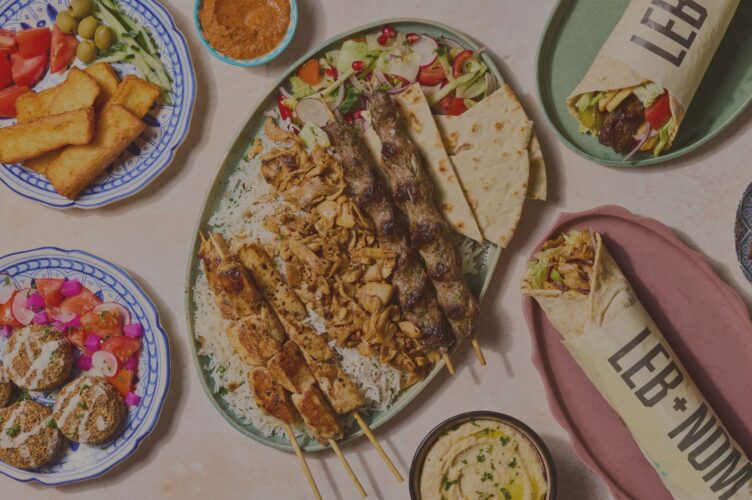
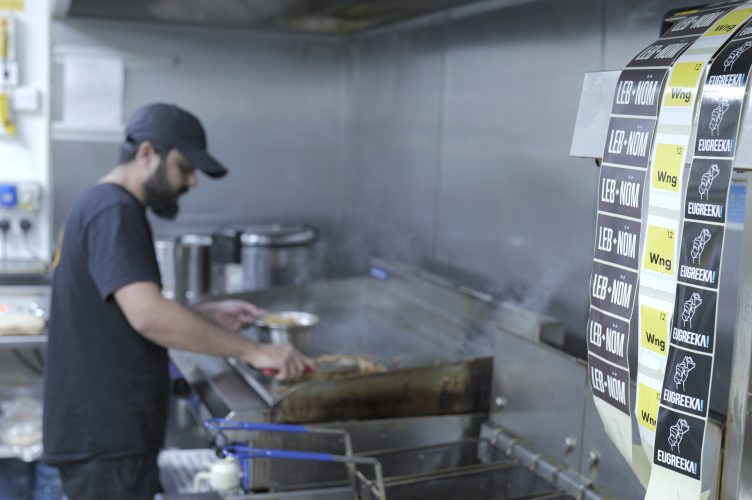
The difference between a standalone dark kitchen operator and a Dish’d partner is not the platform mechanics. Both use Core Delivery on Deliveroo. The difference is the starting point: proven brands (Wingology, Eugreeka!, Bao + Bowls, Leb + Nom), tested recipes, launch training, menu photography, and ongoing operations manager input. Read how Dish’d partners are performing
Where operators go wrong on Deliveroo
Most Deliveroo mistakes are made in the first 60 days. These are the ones that come up repeatedly in operator accounts.
Wasting the 30-day boost window. Not running promotions or ads during the first month means the highest-visibility period passes without building order history. Once the boost ends, the algorithm has no data to reward. Ranking drops and recovery takes months.
Ignoring prep time. Estimated Order Duration is a direct ranking factor. Slow prep damages position continuously. Operators who struggle to hold consistent times during peak service lose ground every week, not just occasionally.
Going live without food photography. A 24-25% order uplift is documented, and no other single action comes close to that number. Launching without photos means accepting lower conversion and lower ranking before the first order arrives.
Underpricing without the volume to compensate. Low prices without high order volume is margin erosion with no recovery path. The Value Programme monitors price parity against dine-in too, so extreme underpricing can also harm the score directly.
Menu and allergen update lag. Changes can take up to 48 hours to appear on the Deliveroo app. Operators running multiple virtual brands on Deliveroo from one kitchen are more exposed to this. Each virtual brand Deliveroo lists independently, so a menu error on one brand does not automatically flag on the others. Allergen information that falls behind the live menu creates legal exposure under UK food labelling law (Infinitas Food Safety).
Not checking local market saturation. Launching a burger brand in a borough already saturated with burger listings means fighting for a smaller slice of an already-contested category. Open the Deliveroo app in your postcode and check what is already there before committing to a cuisine type.
How Dish’d partners fit into the Deliveroo picture
Dish’d partners list the franchise brands from their own existing commercial kitchens. They are not Editions operators. Running a virtual brand on Deliveroo through the Dish’d model means using Core Delivery, the same product any independent dark kitchen operator would use, and paying the same industry-reported commission rates.
What the franchise model changes is the early order volume problem, which is the hardest part of Deliveroo for any new listing. Dish’d provides six-day on-site launch training, full menu photography before go-live, tested and costed recipes, and monthly operations manager consultations. The first 30 days are actively managed rather than left to the operator to figure out alone.
All four Dish’d brands were recognised among the UK’s Top 50 fastest-growing food and drink franchise brands by What Franchise magazine (Issue 20.3, June 2025).
The franchise investment is £10,000 to £20,000 total, with a £3,500 franchise fee on a 2-year renewable term. To put that in context: going it alone as a virtual brand on Deliveroo means covering brand development, recipe testing, photography, packaging design, and platform setup from scratch. The Dish’d entry cost includes all of that, plus the launch support and ongoing consultations.
If you have an existing commercial kitchen and want to understand whether adding a Dish’d brand makes sense for your Deliveroo performance, speak to the Dish’d team.
The bottom line on Deliveroo dark kitchens
Deliveroo is significant infrastructure for dark kitchen food delivery operations in the UK, but it is not a passive channel. The algorithm is explicit and documented. Commission is industry-reported at 25-35%, typically cited at 30-35%. The first 30 days are the highest-leverage window a new listing will ever have, and a large number of operators either waste it or do not know it exists.
The Editions model solves the premises problem by trading margin for infrastructure. It works well for established brands testing new locations. For an operator still learning the platform, it is probably not where to start.
Revenue figures across UK operators range from £3,500 per week at the lower end of active operations to over £20,000 per week for top-performing Dish’d partners. The gap comes down to launch discipline, photography, promotional activity, and prep time management. None of those things are complicated. Most of them are just decisions made or not made before the listing goes live.
One thing worth watching: DoorDash announced the acquisition of Deliveroo for £2.9 billion in May 2025 (TechFundingNews). Platform dynamics will shift as that deal progresses. For context, dark kitchen Uber Eats operators who spread across multiple platforms tend to be less exposed to single-platform commission changes, which is a risk management point worth factoring into any long-term decision. The Value Programme, the algorithm, and the commission structure are the current environment, and that is what operators need to understand right now.
Ready to launch your first delivery-only brand on Deliveroo? How the Dish’d franchise model works and Dish’d partner stories and results before you decide.