UK food delivery hit £14.3 billion in 2025, up from £7.6 billion before the pandemic, and delivery now accounts for 19.9% of all UK eating-out occasions (Lumina Intelligence, 2025). That growth has created a category of franchise opportunity that simply did not exist a decade ago: the virtual restaurant.
The decision for a prospective franchisee has shifted. It is no longer just a question of whether to franchise at all. It is a question of whether a traditional bricks-and-mortar franchise, with its substantial capital requirement and multi-year payback, is the right vehicle, or whether a virtual brand running from an existing or rented kitchen makes more sense for your situation.
This article covers the model in full: what it is, what it costs, how to evaluate an operator, and where Dish’d sits within the broader market. The aim is to give you a framework for making that decision, not to sell you a particular outcome.
What is a virtual restaurant franchise?
A virtual restaurant franchise is a food brand that exists solely on delivery platforms. There is no dine-in service, no walk-in counter, and no customer-facing premises. Orders come through Deliveroo, Uber Eats, or Just Eat; food is prepared in a commercial kitchen and collected by a delivery driver. The virtual restaurant model removes the need for customer-facing premises entirely, which is the defining cost advantage over traditional franchise formats.
The terminology varies by geography. “Dark kitchen” is the standard UK trade term, popularised from 2017 when Deliveroo launched its Editions product. “Ghost kitchen” is the North American equivalent, now significant enough that Merriam-Webster carries a formal dictionary entry, and a ghost kitchen franchise operates on the same underlying model as a virtual restaurant franchise in the UK. “Cloud kitchen” dominates in South and Southeast Asia and the Middle East, where aggregator-backed kitchen networks pioneered the model. All three terms describe the same underlying operation.
Two structural approaches exist. The first is an existing commercial kitchen operator adding virtual brands on top of its current operation, using spare capacity during delivery peak hours. The second is a standalone delivery-only kitchen, either purpose-built or rented, set up specifically for this purpose.
The franchise layer adds a third element: the franchisee licences a tested brand, recipes, and operational system rather than building one from scratch. Whether the operator calls it a virtual kitchen franchise, a ghost kitchen franchise, a dark kitchen franchise, or a virtual restaurant franchise, the operational structure is the same.
By some estimates there are now 5,500+ dark kitchen operations in the UK (2024-2025), up from under 1,000 before the pandemic (Credence Research / Autonomy Work aggregates). The global market is valued at USD $108.8 billion, with the European segment growing at 19% CAGR through to 2032 (Coherent Market Insights, 2025). Cloud kitchen franchise opportunities are expanding fastest in Asia, but the UK market is following the same structural trajectory.
If you want to understand how Dish’d’s brands are structured before reading further, those details are on the site. The full franchise overview covers the package.
How big is the UK market, and is there still room?
The UK delivery market is forecast to exceed £15.8 billion by 2028, with a cross-source consensus of 7-10% CAGR through that period (Lumina Intelligence). That is meaningful growth from an already substantial base.
Platform dynamics are shifting. Uber Eats now leads by delivery occasions at 27.2%, while Just Eat has lost 9.2 percentage points of market share since 2022 and sits at 25.2% (Lumina Intelligence, 2024). For operators evaluating virtual restaurant Uber Eats opportunities, that 27.2% share means Uber Eats is currently the largest single platform by occasions. The most consequential structural development is DoorDash’s acquisition of Deliveroo for £2.9 billion, announced May 2025. What that means for operator terms and commission structures over the next two to three years is genuinely uncertain, but it brings US capital and scale to Deliveroo’s UK infrastructure.
The consumer driving this market is worth understanding. 69% of Gen Z use delivery apps regularly, ordering 4.5 times per month compared with 1.1 times for older generations (Deliverect, 2024). 55% discover food options via social media. This is a cohort growing into its peak earning years, and its ordering habits are structural rather than cyclical.
On cuisine, the data is specific. Chicken wings are the number one trending delivery item in the UK according to Deliveroo’s own top 100 analysis (2024). Burgers account for 15% of Deliveroo’s top 100 dishes. Greek, Middle Eastern, and Asian fusion are all showing documented growth in the same dataset.
The honest answer on competition: the market is large and still growing, but platform visibility is a genuine challenge. A new listing does not automatically attract orders; it needs to earn them, particularly after the initial 30-day boost window closes. That question is addressed directly in the operator assessment section below.
If you want to see which cuisines Dish’d’s Wingology brand and Eugreeka!, Bao + Bowls, and Leb + Nom target, the brand pages have the detail.
What does a virtual restaurant franchise cost?
The investment gap between traditional and virtual franchise models is large, and it is the most important structural fact in this category.
| Factor | Traditional (e.g. McDonald’s UK) | Virtual brand franchise |
|---|---|---|
| Total investment | £1.3m-£2.4m (McDonald’s 2023 figures) | £0-£20,000 |
| Franchise fee | £30k-£100k+ | £0-£3,500 |
| Premises required | Yes | Not if using existing kitchen |
| Fit-out cost | £100k-£500k+ | £0-£15,100 |
| Front-of-house staff | Required | Not required |
| Break-even | 3-5+ years typical | 6-12 months (operator data) |
For a virtual brand operation, a basic kitchen fit-out for an operator starting from an empty rented space costs £5,300-£15,100 in equipment: griddle, fryer, extraction, refrigeration, prep surfaces, sinks, and installation. Ghost kitchen franchise cost varies widely depending on whether the operator is fitting out from scratch or using an existing commercial kitchen; the £5,300-£15,100 figure applies to the former. A real South East London operator spent approximately £5,700-£6,400 on equipment plus £2,000-£2,485 per month in running costs including rent and bills (StartupMag UK). The £69,000-£140,000 dark kitchen build figures cited in some reports apply to purpose-built facilities with full technology systems and working capital reserve, not to a kitchen fit-out.
Insurance should be budgeted at £400-£1,100 per year for a typical dark kitchen operation, covering public liability, product liability, and employer’s liability (SimplyQuote, Simply Business). Cloud kitchen franchise cost in Asia can run significantly higher due to aggregator infrastructure fees, but the UK market equivalent sits within the ranges cited above.
For context across the broader franchise market: the average UK franchise investment across all sectors is £42,200, and 92-97% of franchisees across all sectors report profitability (British Franchise Association, 2024 data). Virtual brand franchises sit well below that average investment figure.
See what Dish’d’s full franchise package includes. Full details on costs, training, and support
What a complete franchise package should include
Before evaluating any specific operator, including Dish’d, it is worth establishing what a properly structured franchise package looks like. The British Franchise Association sets good-practice standards that apply regardless of sector.
A complete package should cover these nine areas:
- Exclusive or protected territory, with clearly defined geographic boundaries that prevent another franchisee from operating the same brand in your area
- Initial training, specified in days and format rather than described vaguely as “support”
- A written operations manual, not just verbal guidance
- Ongoing support with a defined frequency and contact method
- Brand and marketing materials, not just permission to use the logo
- Documented, reproducible recipes rather than informal know-how transfer
- Approved supplier relationships that give franchisees market-rate purchasing
- Clear renewal and exit terms, including what it costs to leave early
- Audit rights specifying how performance data is reported and verified
The red flags: no territory protection, unilateral termination rights without cause, unsubstantiated earnings projections, and the absence of a franchise disclosure document. If a franchisor cannot or will not provide a written operations manual before you sign, that tells you something.
One important structural point: the UK has no mandatory franchise disclosure law. Unlike the United States or Australia, there is no regulatory requirement for a franchisor to provide a formal disclosure document before a franchise agreement is signed. The burden is entirely on the franchisee to ask the right questions and seek independent legal advice. This applies to every franchise in this market, regardless of reputation or scale.
How to assess an operator’s track record
Due diligence on any virtual brand franchisor should go beyond reading the marketing materials. Put these questions directly to whoever is selling you the franchise:
- How many franchisees are currently trading, not how many have ever signed?
- What is the median weekly revenue across the network, not the performance of the top quartile?
- Can you speak to existing franchisees without a company representative on the call?
- How can they demonstrate their financial stability?
Kbox Global raised £12 million in September 2020 and built approximately 200 UK dark kitchen locations on a revenue-share model. In October 2023, the company entered administration. It was acquired by The Cloud (UAE) in February 2024, with existing UK operator contracts absorbed into the new structure. Operators who had built operations around the Kbox model found themselves mid-contract when the company failed. Operator financial stability is a material risk factor, not a remote one.
Platform visibility is the operational risk that matters most in the early months. Deliveroo gives new listings a 30-day visibility boost, after which ranking depends on order volume, customer ratings, and prep speed.
Operators who do not generate enough order volume during that 30-day window face a visibility cliff. The ranking algorithm post-boost is driven by order volume history, customer rating, preparation speed, and acceptance rate. A new listing with thin order history ranks poorly, which generates fewer orders, which keeps order history thin. Breaking that cycle is the central operational challenge of the first three months.
On platform commissions: Deliveroo is industry-reported at 30-35% for standard operations (Menuviel Commission Guide). Dark kitchen Uber Eats operators pay up to 35% on the standard tier, or 13% if they provide their own courier. Just Eat operates at 14% + VAT, plus £0.50 per order and a £295 setup fee (Aviko Platform Comparison; UK Business Forums). These are not small numbers. On a £22 average order value, a 30% commission leaves £15.40 before food costs, packaging, labour, and rent. Margin discipline, not optimism about revenue, is what determines whether the model works.
The industry has been direct about this tension. Mark Smith, then Managing Director of Pho, said in March 2018: “There isn’t enough money. I’ve spent a lot of time looking at the economics of these models. It isn’t working. There isn’t enough money for everyone.” (Foodservice Equipment Journal, March 2018.) That observation was made early in the dark kitchen market’s development, and the model has matured considerably since. The underlying point about margin management has not changed.
The UK market: who is offering what?
Two structural models dominate this market. Revenue share means no upfront cost, but the operator pays an ongoing percentage to the franchisor on every order. An upfront franchise fee means a one-off payment, with the operator retaining more margin per order over the life of the agreement. Both structures are represented across the food delivery franchise opportunities listed above, and both apply equally to dark kitchen franchise arrangements as to any other virtual brand format.
Neither is inherently superior. Revenue share reduces entry risk but compounds the commission burden on top of platform fees. An upfront fee increases the initial outlay but can offer better economics if volume is strong.
On Growth Kitchen’s margins: host kitchens are cited at £400-£1,500 weekly profit, but the combined licence and platform fee percentage is not publicly disclosed, which makes independent verification of that figure difficult.
On Peckwater’s scale: 5,300+ listings and 250+ physical sites following its Stonegate Group partnership make it the largest operator in this space by footprint.
The Kbox cautionary note from the previous section is worth repeating here: scale and funding are not guarantees of continuity. Kbox had 200 UK locations and £12 million in backing. Operator financial stability is a question to put to every provider in this table, including the larger ones.
Dish’d franchise details
What Dish’d offers
Here is how Dish’d sits against the framework above.
The package, from the What Franchise magazine listing: franchise fee of £3,500, total investment of £10,000-£20,000, on a 2-year term that is renewable. Included in that are a kitchen assessment, sales forecasting, six-day on-site launch training, monthly operations manager consultations, recipes, menus, and marketing materials. Time to going live is 4 weeks.
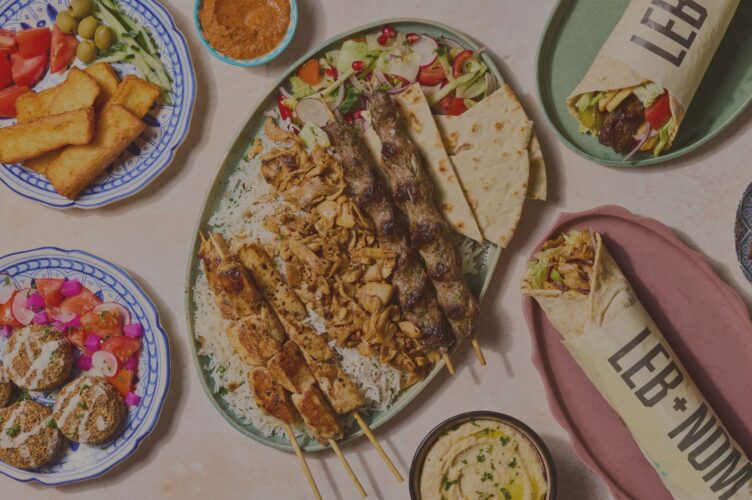
The four brands are Eugreeka! (Greek), Bao + Bowls (Asian), Leb + Nom (Middle Eastern), and Wingology (fried chicken). These virtual restaurant brands all sit in cuisines that Deliveroo’s own data identifies as growth categories, and chicken wings are the number one trending UK delivery item.
Revenue figures (franchisor-sourced, not independently audited): average weekly additional sales of £8,000; weekly sales range of £8,859-£15,321; weekly profit range of £2,002-£3,462; top performer over £20,000 per week; average order value £22. These figures are cited consistently across Dish’d’s own site and the What Franchise directory listing. As with all franchisor-generated projections in this market, treat them as indicative rather than audited. Ask to speak to current franchisees and verify whether their actual figures are consistent with these ranges.
Dish’d partners report weekly additional sales averaging £8,000, with one London operator exceeding £9,000. Franchisees describe the brands as straightforward to prepare and well received by customers.
All four Dish’d brands were named in What Franchise magazine’s Top 50 Fastest Growing Food and Drink Franchise Brands in the UK (Issue 20.3, June 2025). This is a trade magazine accolade based on the publication’s own criteria, not an independently audited regulatory certification. For a franchise at this stage of development, it is worth noting.
Company verification: DISH’D LTD, Companies House number 14136623, incorporated 27 May 2022, SIC code 56290 (Other food services), status Active.
A direct note on the ROI claim: Dish’d cites a 3-6 month payback period. The broader operator data in this article, including the industry benchmark of profitability typically reached between months 6-12, suggests 3-6 months is achievable for operators who execute the launch window well, but it is not guaranteed for all operators. An operator who is slow to generate orders during the 30-day boost period, or who launches without food photography and promotions active, is unlikely to hit that timeline. Plan for 6-12 months and treat 3-6 months as the upside scenario, not the starting assumption.
Dish’d franchise package, costs, and application process
Ready to evaluate whether Dish’d fits your situation? Download the Dish’d franchise prospectus or book a call with the team
Who the model suits, and who it does not
The most natural fit is an existing commercial kitchen operator with spare capacity during delivery peak hours, typically Friday evening and weekends. Of the food delivery franchise opportunities currently available in the UK, this is the one with the lowest entry barrier. The virtual restaurant model is also the easiest to test without committing to long-term premises, because the kitchen can serve multiple virtual restaurant brands without any customer-facing changes to the space. The infrastructure is already in place, staff are already trained to food hygiene standards, and the incremental cost of adding virtual brands is primarily the franchise fee and any minor equipment additions. The platform commission still applies, but there is no new rent or fit-out cost to recover.
Also viable: a prospective operator taking on a rented kitchen unit with a £5,000-£15,000 fit-out budget and a working capital reserve covering 3-6 months of operating costs. Monthly running costs for a basic South East London-style operation are in the range of £2,000-£2,485 (StartupMag UK). If monthly revenue stays below £5,000, an operator on those cost levels will draw down capital quickly. The 3-6 month capital buffer is the standard industry expectation for a reason.
The model does not suit operators who underestimate compliance requirements. Food business registration must be completed with the local authority at least 28 days before trading (GOV.UK). HACCP food safety systems are a legal requirement. The FSA will inspect, and Deliveroo requires a minimum FSA rating of 2 to appear on the platform. A new delivery-only kitchen without customer access may require specific planning permission, as the 2020 planning use class reform means delivery-only operations do not fit neatly into Class E and may be classified as Sui Generis. Pre-application advice from the local planning authority before signing any lease is essential.
It also does not suit operators expecting passive income without active launch-phase management. The 30-day boost window is the single highest-leverage period a new listing has. Going live without promotions, food photography, or sponsored listings active is a common and costly mistake.
Questions to ask yourself before you sign
- Do I have a registered commercial kitchen, or am I budgeting to set one up from scratch?
- Can I cover 3-6 months of operating costs if the first quarter underperforms?
- Am I prepared to actively manage the 30-day platform boost window from day one?
- Do the target cuisines match unmet demand in my specific postcode, or is the area already saturated?
The questions worth asking before you commit
Whatever operator you are evaluating, these are the seven questions that matter most. There is no mandatory franchise disclosure law in the UK, so these questions are the franchisee’s primary protection.
- How many franchisees opened in the last 12 months, and how many are still trading today?
- What is the median weekly revenue across your network, not the performance of your top franchisees?
- What specific support do I receive during the 30-day platform boost period?
- Are your revenue projections based on independently audited financials or internal estimates?
- What is the exit process, and are there any clawback provisions on the franchise fee?
- Can I speak to a current franchisee?
If any of those questions receive a vague answer, or if the franchisor declines to provide franchisee contact details, that is a signal worth taking seriously.
Conclusion
A traditional franchise comes with known brand recognition and a business model that has been tested over decades. It also requires £1.3m-£2.4m to enter, a 3-5 year payback horizon, and a full premises commitment. A virtual restaurant franchise, virtual kitchen franchise, or ghost kitchen franchise requires £10,000-£20,000, with a potential payback within 6-12 months, and can run from existing kitchen infrastructure.
The demand is there. £15.8 billion by 2028, a Gen Z cohort ordering 4.5 times per month, and documented consumer appetite for exactly the cuisines that perform best on delivery platforms: chicken, Greek, Middle Eastern, Asian fusion.
When operators fail in this model, it is rarely because the concept is wrong. It is usually because the compliance work was not done before launch, the 30-day boost window was wasted, or the franchise support turned out to be thinner than the sales materials suggested. Those are the things to investigate before you sign anything, whether you are evaluating a virtual kitchen franchise, a ghost kitchen franchise, or any of the cloud kitchen franchise opportunities that have entered the UK market in recent years.
Evaluate every operator in this market, including Dish’d, against the framework in this article. Ask the hard questions about network size, median revenue, and financial stability. Get independent legal advice before signing any franchise agreement.
If you want to see how Dish’d holds up against that checklist, the details are on the Become a Franchisee page. Or book a no-obligation call with the Dish’d team to put the questions directly.