What to look for, what to avoid, and the questions most operators forget to ask
The UK food delivery market is worth £14.3 billion in 2025 (Lumina Intelligence, 2025) and has nearly doubled since 2019. There are more food franchise opportunities available right now than at any point before. The problem: most offers look identical at the landing-page level. Weekly revenue figures, a brief list of inclusions, a handful of testimonials. Comparing them properly means digging into the actual contract terms, the support structure, and the platform economics, not the marketing copy.
This article is a practical framework for evaluating any food franchise in the UK, with the uncomfortable questions included. Because the choice between a traditional restaurant franchise and a virtual brand model is increasingly relevant for existing kitchen operators, that comparison gets its own honest section later on.
Why this decision is harder than it looks
The range of entry costs alone should tell you something. A McDonald’s franchise requires a total investment of £1.3m-£2.4m (McDonald’s UK, 2023 figures). A Subway comes in at £85,570-£328,700. Some virtual brand franchises start from under £10,000.
The British Franchise Association reports that fewer than 2% of franchised businesses fail in any given year, and that 92-97% of franchised businesses are profitable (2024 BFA data). The sector contributes £19.1 billion to the UK economy. Those are reassuring numbers. They are also aggregate figures that do not distinguish between a mature fast-food franchise with decades of consumer recognition and a two-year-old virtual brand operating from a shared kitchen. If you are working out the best food franchise to buy in this environment, aggregate sector data is a starting point, not a decision tool.
Most operators spend more time choosing a commercial fryer than reading a franchise disclosure document. That imbalance is where most bad decisions originate. Building a consistent checklist before any conversation with any franchisor is the simplest way to avoid it.
The five formats you will actually encounter
With so many food franchise opportunities available in the UK right now, the term “food franchise” covers a wide range of models with very different cost profiles, risk levels, and day-to-day operations. Narrowing down the best food franchise opportunities means understanding the differences between these formats before comparing individual offers. Here is what you will actually find.
Traditional restaurant franchise (dine-in)
The names most people recognise: McDonald’s, KFC, Nando’s, Subway. Entry costs run from around £85,000 for a Subway up to £5 million or more for a KFC, with fit-out, premises, and front-of-house staff factored into the total. Ongoing royalties typically fall between 4% and 18% of revenue.
These franchises carry real consumer brand recognition. They also have resale value, which most other formats do not. Break-even typically takes three to five years or longer. For operators who want a lower-capital entry point, restaurant franchise opportunities in the virtual brand space are increasingly worth comparing alongside the traditional names.
Delivery-only standalone (no franchise attached)
An operator rents or owns a commercial kitchen and trades entirely through delivery platforms. No franchisor involved, maximum margin control, maximum complexity. Setting up from scratch requires £5,300 to £15,100 in equipment alone (based on industry cost data), plus rent and compliance costs. One South East London operator case study (StartupMag UK) put monthly running costs at £2,000 to £2,485 before platform commissions.
Virtual brand franchise (using an existing kitchen)
The main UK franchisors in this space right now include Sessions (400+ partner kitchens and high-street sites, no upfront fee, ongoing revenue share, led by ex-Deliveroo MD Dan Warne), Growth Kitchen (around £900 to £1,400 upfront, 18-20% margins), and Cook’d Brands (AI-driven brand selection, fees not disclosed publicly). Dish’d, covered in detail below.
Platform-owned delivery-only kitchen space
Deliveroo Editions places operators inside Deliveroo’s own kitchen infrastructure across 20+ UK sites. Deliveroo provides the space, equipment, dishwashing, and cleaning. Commission rises to industry-reported figures of up to 35%. There is no upfront cost, but you must already be a Deliveroo partner to apply. Named Editions partners report a streamlined onboarding process.
Licence model (named brand placed into existing kitchen)
Growth Kitchen places established restaurant brand menus into host kitchens. The operator pays a percentage of sales. This is not a franchise in the legal sense, which changes the risk and reward profile considerably. Margins run at 18-20%, with typical weekly profit reported at £400 to £1,500.
Format comparison
| Factor | Traditional restaurant | Virtual brand | Delivery-only standalone | Licence model |
|---|---|---|---|---|
| Upfront cost | £85k-£5m+ | £0-£20,000 | £5,300-£15,100 (equipment only) | £900-£1,400 |
| Ongoing fee type | Royalty (% of revenue) | Revenue share or flat fee | None | % of sales |
| Premises required | Yes | No (if existing kitchen) | Yes | No (if existing kitchen) |
| Consumer brand recognition | High | Low | None | Medium (licensed brand) |
What separates a strong franchise offer from a weak one
What the BFA says should be standard
The British Franchise Association publishes its good practice standards. Knowing which food franchise available in the UK actually meets those standards is half the battle. A compliant franchise agreement should include: exclusive or protected territory, initial training, an operations manual, ongoing support, brand and marketing support, access to approved suppliers, renewal and exit terms, and audit rights.
Territory protection is not optional. An agreement without it means the franchisor can place a competing franchisee in your catchment area the week after you sign. Any franchise agreement that does not match BFA standards is a negotiation point, not a take-it-or-leave-it offer. The BFA’s standards are public. Use them.
Support that should be included from day one
Training: what format, how long, where, and delivered by whom? An induction day is not the same as six days of on-site hands-on training. Ask for specifics.
Operations manual: is it a living document with regular updates, or a PDF you receive once and never see revised?
Launch support: does the franchisor come to site for opening? For how long?
Marketing assets: this means brand photography, social media templates, and platform listing setup, not a folder of logos.
As an example of what a well-structured package looks like in practice: Dish’d’s franchise package includes a kitchen assessment, sales forecasting, six days of on-site launch training, monthly operations manager consultations, recipes, menus, and marketing assets, all within the £3,500 franchise fee.
The platform side: what good looks like
A virtual brand franchisor that understands how Deliveroo’s algorithm works gives franchisees a real advantage that cannot be replicated after the fact.
Deliveroo gives new listings a 30-day visibility boost in the app, after which ranking depends on order history, ratings, and prep speed. An operator who does not have a structured launch plan for that window is leaving the most valuable free marketing they will ever get on the table.
Menu items with photos produce a 24-25% order uplift (Deliveroo data). Ask every franchisor whether food photography is included in the fee before you sign. Many do not include it.
The red flags most operators miss
Contract red flags
No territory protection. The most common omission in early-stage franchise agreements. If a territory is not explicitly defined and protected in writing, it does not exist.
Unilateral termination rights without cause. Any clause that allows the franchisor to end your agreement without defined grounds puts your entire investment at their discretion.
Excessive fees with no documented deliverables. A fee schedule should correspond to a specific list of what you receive. If it does not, you have no basis for a dispute if support fails to materialise.
Unsubstantiated earnings projections. Any revenue figure presented without an audited basis or verified franchisee results should be treated as aspiration, not contractual expectation. This applies to every franchisor in this category, including the one publishing this article.
Required purchasing from the franchisor at above-market prices. A markup on ingredients every week erodes margin throughout the entire term. Model this out before signing. It is one of the factors that separates the best food franchise to buy from one that looks attractive on paper only.
No renewal provision or unfair renewal terms. A two-year term that auto-terminates with no renewal pathway is a short-term licence dressed up as a franchise.
Market and platform red flags
A franchisor who cannot explain platform commission structures clearly is presenting incomplete numbers. Deliveroo’s rate is industry-reported at typically 30-35%. Uber Eats is reported at up to 35% (tiered structure applies). Just Eat charges 14% plus VAT plus £0.50 per order. If a revenue projection does not account for these deductions at the gross level, the net figures will look significantly better than reality.
Margin pressure in this sector is real, and it has been well documented since the early days of delivery kitchen operations. The point about unit economics stands. Demand transparent numbers, not attractive headlines.
No documented launch protocol for the platform boost window. This is a red flag specific to virtual brand franchisors. If they do not have a written plan for your first 30 days on Deliveroo, they either do not understand the algorithm or have not invested in building the operational process to use it.
One cautionary data point: Kbox Global raised £12 million in 2020 and entered administration in October 2023. It was acquired by The Cloud (UAE) in February 2024. The sector is growing, but not every operator in it has the staying power to support a network of franchisees through years one and two. Ask how long the franchisor has been operating and how many of their original franchisees are still active.
For a clear breakdown of what Dish’d discloses on fees and projections, and how those numbers are presented, see the Dish’d franchise page.
Traditional restaurant franchise vs. virtual brand: an honest comparison
The cost gap is not marginal
When deciding on the best food franchise to open, the capital gap between virtual brands and traditional restaurants is the first thing to work through.
| Factor | Traditional restaurant | Virtual brand |
|---|---|---|
| Total investment | £85k (Subway) to £5m+ (KFC) | £0-£20,000 |
| Premises required | Yes | Not if existing kitchen used |
| Front-of-house staff | Yes | No |
| Break-even timeline | 3-5+ years | Under 12 months (franchisor-claimed) |
| Consumer brand recognition | High | Low |
| Resale value | Significant | Low to none |
| Multiple brands per site | Rarely | Yes |
This is a decision about capital risk and time horizon, not a verdict on which model is superior. For operators evaluating the best food franchises to own over a longer term, a McDonald’s or Subway franchise can be sold on the open market at meaningful value. A virtual brand licence typically carries no transferable goodwill. Different instruments for different operators in different situations.
What virtual brand gives up
Consumer brand recognition starts at zero. Deliveroo’s ranking algorithm rewards order history, and new listings have none. The first 30 days of the platform boost period are the only free help you get before the algorithm starts comparing you to established operators with months or years of order data behind them.
There is also no resale market. If you decide to exit a virtual brand franchise after 18 months, you are unlikely to recover the franchise fee.
The “TikTok to Table” dynamic does reduce the traditional brand recognition disadvantage among younger customers. 55% of Gen Z consumers discover food options via social media, and 69% use delivery apps regularly (Deliveroo Top 100 / consumer research, 2024). That narrows the gap for a well-photographed and well-marketed virtual brand. It does not close it.
What virtual brand offers that traditional franchising cannot
Multiple income streams from one kitchen without additional premises costs. A single commercial kitchen running two or three virtual brands generates revenue that a single traditional franchise cannot produce from the same footprint.
Speed to market. Dish’d documents a four-week timeline from agreement to going live. A traditional restaurant fit-out runs months, sometimes longer, before the first order is taken.
The market supports the model. UK food delivery is forecast to reach £15.8 billion by 2028 (Lumina Intelligence). Dish’d franchisees report an average of £8,000 per week in additional sales from virtual brands added to an existing kitchen (franchisor-reported, not independently audited).
On failure rates: approximately 50% of non-franchised startups fail within five years. BFA-tracked franchises run below 2% annual failure across all types (2024 BFA data). That gap is significant and holds up across multiple years of BFA research. The caveat, again, is that the BFA figure is an aggregate across all franchise models and experience levels. For anyone researching the best food franchise to open from an existing kitchen, that failure rate differential is one of the strongest arguments for the franchised route over going it alone.
If you are working from an existing commercial kitchen and want to understand what adding virtual brands looks like in practice, contact the Dish’d franchise team.
The questions you must ask before signing anything
Bookmark this. Take it into any conversation with any franchisor.
- Is my territory exclusive, and is that exclusivity written into the agreement?
- What are the exact ongoing fees, and do they apply to gross or net sales?
- What is the platform commission rate, and how does that factor into your revenue projections?
- What happens at the end of the franchise term? Is renewal automatic, conditional, or at the franchisor’s discretion?
- Can I speak to three existing franchisees before I sign?
- What is your onboarding protocol for the first 30 days on each delivery platform?
- What marketing assets are included, and specifically: is professional food photography provided?
- What support do I receive if sales fall below the projected range in months one to three?
- Are your revenue projections based on audited franchisee data, or are they hypothetical maximums?
- What was your response the last time a franchisee raised a dispute with you?
Questions five and ten are the ones most operators skip. They are also the most informative. A franchisor who hesitates on either of them is telling you something.
Where Dish’d fits in
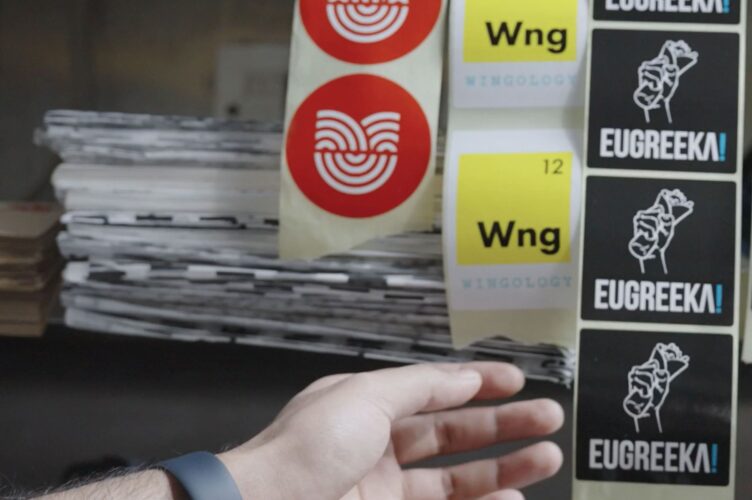
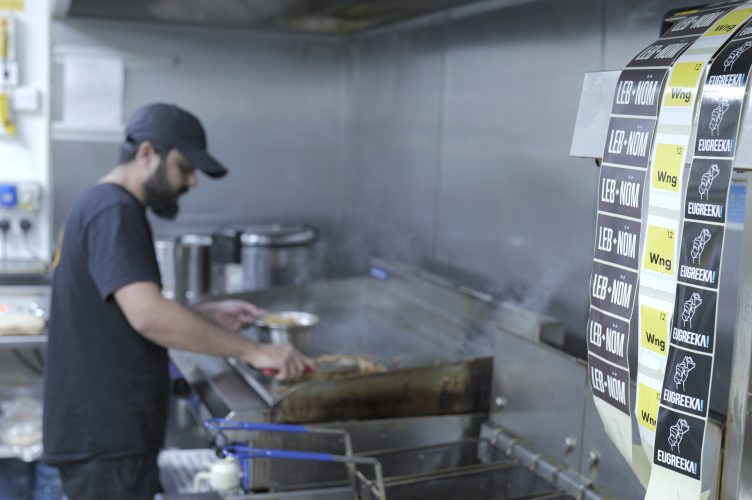
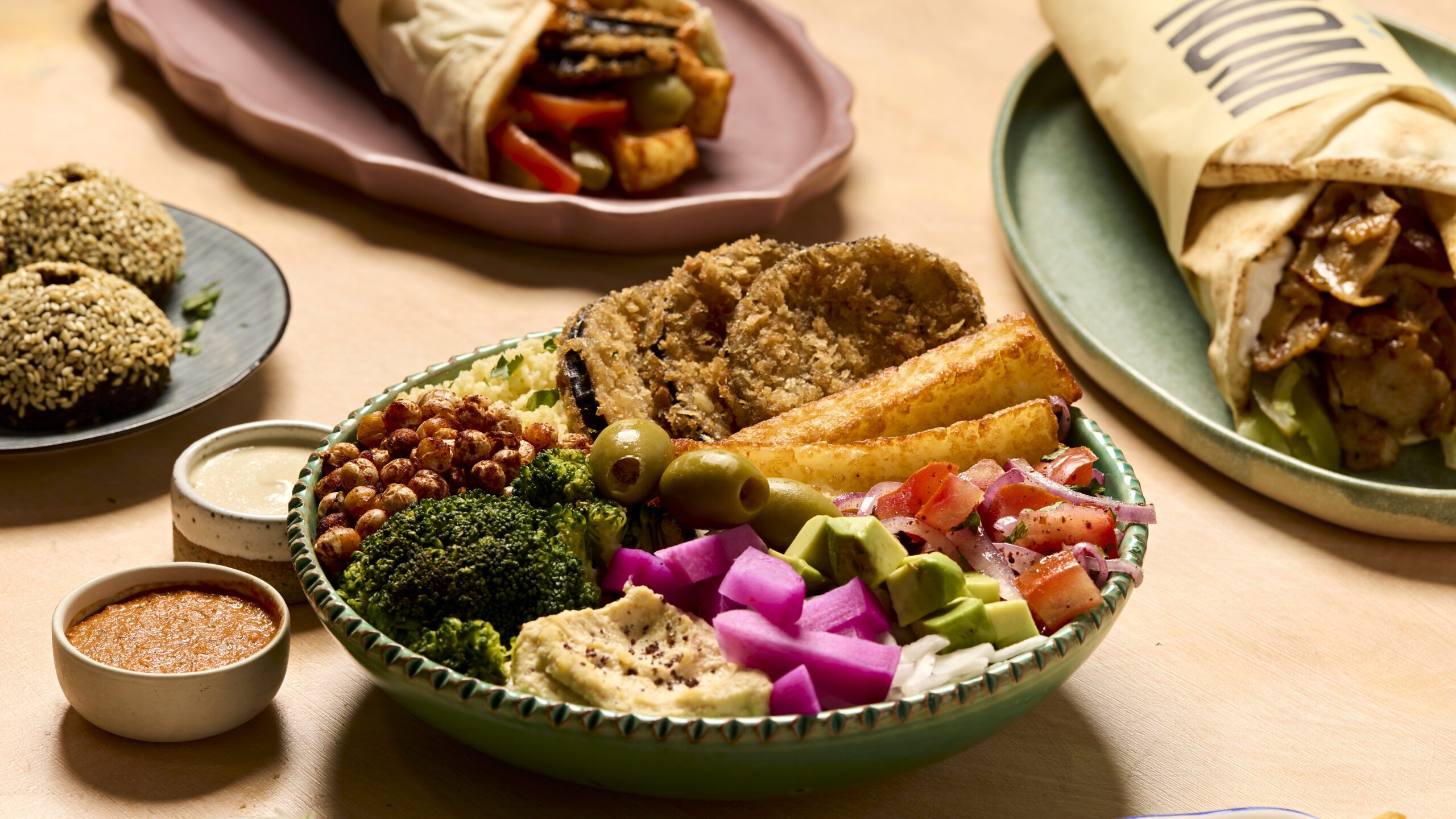
For operators looking at restaurant franchise opportunities at the lower end of the investment range, Dish’d is a UK virtual brand franchisor incorporated in May 2022 (Companies House 14136623). It operates four proprietary brands: Eugreeka! (Greek), Bao + Bowls (Asian), Leb + Nom (Middle Eastern), and Wingology (fried chicken). All four were named among the UK’s Top 50 fastest-growing food and drink franchise brands by What Franchise magazine (Issue 20.3, June 2025). That is a trade magazine accolade, not a regulatory certification, but it is independent of Dish’d’s own marketing materials.
Total investment is £10,000 to £20,000. The franchise fee is £3,500. The term is two years, renewable. The package includes a kitchen assessment, sales forecasting, six days of on-site launch training, monthly operations manager consultations, recipes, menus, and marketing assets.
Dish’d currently operates across 70+ partner kitchens in England, Scotland, and Wales.
Dish’d partners report weekly additional sales averaging £8,000, with one London operator exceeding £9,000. Franchisees describe the brands as straightforward to prepare and well received by delivery customers.
On the numbers: Dish’d reports average weekly additional sales of £8,000, a revenue range of £8,859 to £15,321 per week, and a claimed ROI of three to six months. These are franchisor-reported figures, not independently audited data. Apply the same scrutiny to Dish’d’s projections as you would to any other franchisor’s claims when assessing the best food franchises to own. Ask for the underlying data, ask to speak to existing partners, and model the platform commissions against the gross figures before drawing conclusions.
Find out more about becoming a Dish’d franchisee
Make the decision on evidence, not enthusiasm
Choosing a food franchise is a multi-year financial commitment. The range of food franchise opportunities available in the UK has never been wider, and the best food franchise opportunities are transparent about fees, built around genuine operational support, and honest about what their revenue numbers actually mean in practice.
Use the checklist above before any conversation with any franchisor. Read the agreement against BFA standards. Speak to existing franchisees, not just the ones the franchisor suggests.
If Dish’d matches what you have been looking for, find out more about becoming a franchisee or contact the team directly with any questions.
For more on the platform side of running a virtual brand, see how Deliveroo’s algorithm actually works.