What actually moves the needle in the first 30 days on delivery platforms
Most new virtual food brands treat launch day as a finish line. Operators spend weeks setting up the kitchen, finalising the menu, and getting the listing live, then go quiet once the first order appears. The operators who hit 100 orders fast treat launch day as the start of a four-week campaign.
It is a structural problem that affects all virtual food brands equally. Delivery platforms like Deliveroo are built on order history. Listings with strong history rank higher, attract more views, convert more orders, and build more history. New listings have none of that. The one exception is the 30-day boost window, the only period when the platform works in your favour without requiring you to have earned it first.
This article covers specific, evidence-backed actions for weeks one to four, with notes on what Dish’d builds into every franchisee launch. The steps work for any operator launching virtual food brands on UK delivery platforms. But the window matters more than most people realise, so start there.
Why the first 30 days are make or break
Deliveroo gives new listings a 30-day visibility boost in the app. For the first month, your restaurant appears higher in the list than your order history alone would justify. After day 30, ranking depends on the same factors as everyone else: customer ratings, prep speed, acceptance rate, conversion rate, and order volume.
Those “same factors” are not mysterious, but they are unforgiving for a new listing. Post-boost, your ranking is governed by customer rating, Estimated Order Duration (EOD), order acceptance rate, conversion rate, past order volume, and direct brand searches by name. A listing with thin history across all of those will drop toward the bottom of the stack the moment day 30 arrives.
Every order placed in week one is worth more than an order placed in week six, because early orders build the history that sustains future ranking. Missing the boost window does not just cost you short-term orders. It sets a weaker baseline that is harder to pull yourself out of.
The audience is there. Delivery now accounts for nearly 20% of all UK eating-out occasions (Lumina Intelligence). Virtual brands in the UK compete on the same platforms for the same customers in every postcode. The work is getting in front of that audience during the window when the algorithm is on your side.
See Dish’d’s active virtual brands on UK delivery platforms
Before you go live: what sets your baseline
The boost window starts the moment your listing goes live. These three actions need to be done before that happens, because you cannot recover the visibility you burn through early orders with poor conversion or slow prep.
Food photography is not optional
Menu items with photos drive a 24-25% order uplift (Deliveroo internal data, Peckwater Brands). According to Peckwater Brands, operators using professional food photography earn almost five times more revenue than those without.
Conversion rate, meaning the percentage of people who view your menu and actually place an order, is a confirmed Deliveroo ranking factor. Weak photography means fewer views convert to orders, which suppresses ranking, which compounds over the lifetime of the listing. No other documented change delivers a comparable uplift from a one-time setup action.
To upload: use Menu Manager in Partner Hub, or email [email protected]. Professional photography packages are available through Partner Hub if you need them.
Get your prep time under control before your first order arrives
Estimated Order Duration (EOD) is a direct ranking input. Slow prep creates a negative feedback loop that is hard to reverse once it starts. You accumulate poor EOD data, your ranking drops, fewer orders come in, and the history you are building is thin.
A real-world benchmark: a London operator running a delivery-only kitchen reported completing 40-50 orders per day on weekdays, doubling on weekends, with a 10-minute completion window per order (eCommerce Basis, April 2024). That is the standard worth targeting.
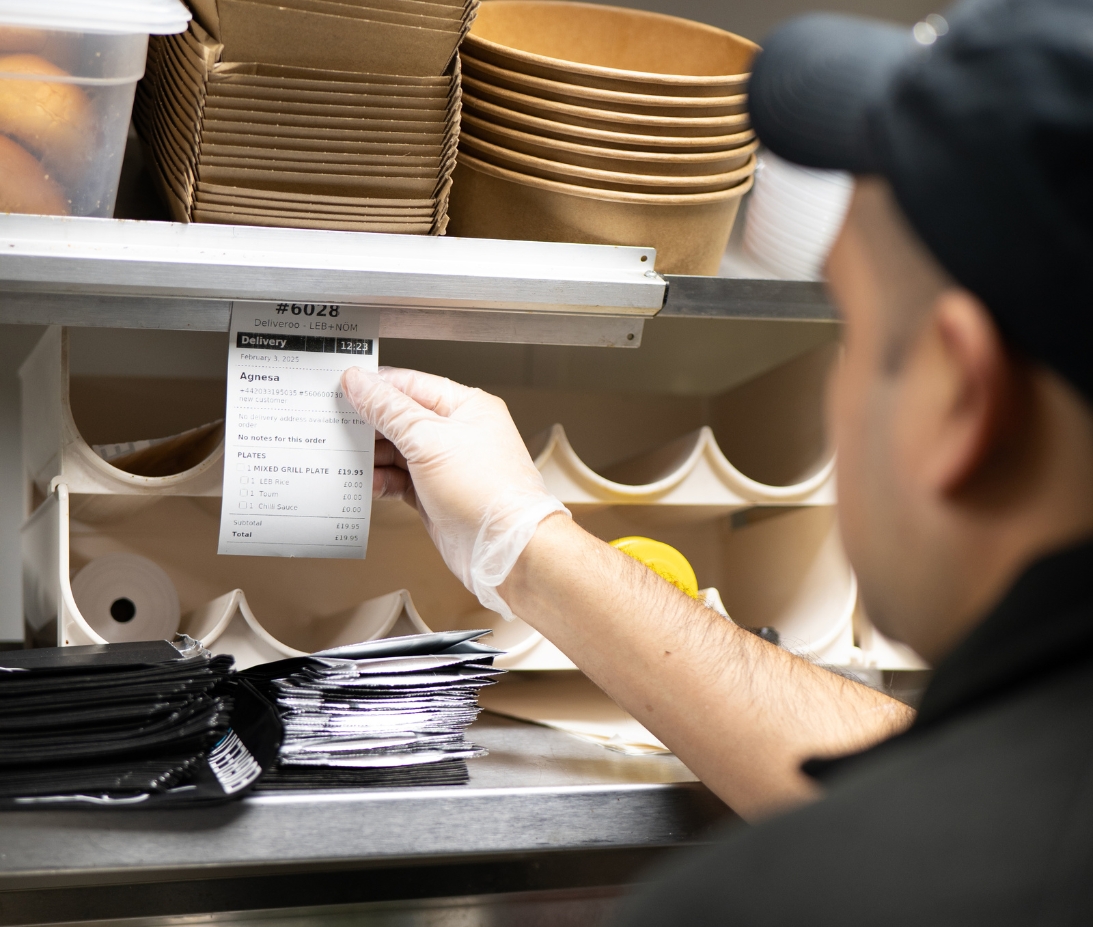
Run test batches of every menu item before you go live. Time each one. Do not launch until prep is consistent across the full menu, not just your fastest items.
Set automatic order acceptance from day one
Deliveroo reports that auto-acceptance reduces rejection rates by over 11% and increases order volume. Rejected orders hurt your acceptance rate (a ranking factor), create a poor customer experience, and generate no revenue. There is no upside to manual acceptance for a new listing trying to build history quickly.
Enable it in Partner Hub before the first order arrives. It takes minutes to set up and the effect on early ranking data is immediate.
Want setup support built in from day one?
The 30-day playbook
Week 1: spend to acquire, protect your rating
The boost is live. You have maximum organic visibility. The job this week is to convert that into orders and reviews, not to protect your margin. Margin optimisation comes later. Acquisition comes now.
Run a launch offer from day one. A 20% discount is a common entry point for new listings. Use minimum spend thresholds to limit margin damage while still pulling in first-time customers who would not otherwise try an unknown brand.
Activate Marketer Adverts immediately. These are Deliveroo’s sponsored listings, running on a CPC auction model from 25p per click. Ads appear on the homepage, in cuisine category lists, and in search. Combined with the organic boost, the claimed uplift is a 40-70% increase in menu views and a 20-40% increase in order volume (Deliveroo internal, Q4 2023). Running ads during the boost rather than after it ends is when they have the most leverage.
Drive external traffic into the listing. Share your Deliveroo listing link on Instagram, TikTok, and WhatsApp. Linking social profiles to your Deliveroo brand page is reported to increase orders by up to 5% (Deliveroo internal data). Customers who search for your brand name directly in the app also contribute to your ranking. Every external push builds that signal.
| Action | Why it matters | When to activate |
|---|---|---|
| Launch discount offer | New customer acquisition | Day 1 |
| Marketer Adverts | Amplifies organic boost | Day 1 |
| Auto-acceptance | Ranking and conversion | Day 1 (setup) |
| Social traffic push | Brand search ranking | Days 1-7 |
| Food photos live | Conversion rate | Before go-live |
Weeks 2-3: build review volume and stabilise prep
Gen Z is the heaviest delivery user segment, ordering 4.5 times per month versus 1.1 times for older generations (Deliverect, 2024). 71% of Gen Z users are influenced by online reviews and user-generated content (Deliverect, 2024). They check your rating before they order. Ghost kitchen brands with thin or absent review histories lose these customers at the browsing stage before a single order is placed.
Target 20 or more positive ratings before the boost window closes. This is not a Deliveroo-published rule. It is a benchmark cited widely by operators and aggregated from platform guidance, but it reflects the practical floor needed to hold credible ranking after the boost expires.
Keep monitoring prep times through weeks two and three. EOD is the most mechanical ranking lever you control directly. It does not require algorithm changes or ad spend. It requires your kitchen running to a consistent standard on every order.
If the launch offer is hurting margin too badly, move to a spend-and-save structure (for example, £5 off a £25 order) rather than switching promotions off entirely. Keeping some form of offer running through the full boost period maintains your conversion rate and keeps the listing visible in offer carousels.
Week 4: prepare for the cliff
Day 30 is the hardest day in the launch phase. The boost ends and the listing drops to standard ranking. Operators who have not used the window effectively will feel this as a sharp visibility drop. The ones who have built order history and review volume will feel a softer transition.
In week four, review your Value Programme score in the Partner Hub. The Value Programme is Deliveroo’s explicit ranking system: price parity, service quality, and customer rating combine into a monthly score that directly governs your app visibility. A “Good” or “Great” score unlocks Deliveroo-funded promotional slots and carousel placement. A weak score heading into the post-boost period makes the cliff harder to climb back from.
Deliveroo’s own data on BOGOF campaigns: order volume up 38%, incremental revenue 53% higher than basket discounts, average order value up 13%, new customers up 67% (Deliveroo internal). These promotions are Deliveroo-funded for partners who qualify under the Value Programme. Qualifying before day 30 means entering week five with Deliveroo’s marketing budget behind you, not just your own.
Refresh your ad spend going into week five. Post-boost, paid ads carry more relative weight because your organic ranking is no longer being supported.
Read our guide to how delivery platform algorithms work
The levers that actually move volume
Not all tactics are equal. These are the ones with evidence behind them.
Cuisine positioning and local saturation
Before you set your menu positioning, check what is already ranked in your target delivery area. Chicken wings are the number one trending item in the UK (Deliveroo Top 100, 2024). Burgers account for 15% of Deliveroo’s top 100 dishes. Pizza accounts for 8%. Greek, Middle Eastern, and Asian fusion are in strong growth. Caesar salad has become a major viral TikTok trend (Deliveroo Top 100, 2024).
Ghost kitchen brands that enter oversaturated categories without meaningful differentiation compete on price. That destroys margin. Virtual restaurant brands built around a multi-cuisine franchise model have a structural advantage here: operators can match their active brand to local demand rather than being locked into a single cuisine regardless of what is already crowded in the area.
Delivery speed and the “Fastest Delivery” carousel
The “Fastest Delivery” carousel is a free visibility slot triggered by consistently fast prep. Operators targeting sub-25-to-30-minute fulfilment are eligible for inclusion.
Deliveroo Editions data provides context: orders from Editions sites average five minutes faster than brick-and-mortar sites, with late orders and missing items occurring at one-third the rate (Deliveroo internal, EHO ratings data Jan-Jul 2024). Those benchmarks come from optimised delivery kitchen environments, but any operator with disciplined prep can compete for the placement. It is not limited to Editions sites.
Basket size matters more than order count
UK delivery basket sizes are up 24% year-on-year (Lumina Intelligence 2025). Partners running Dish’d brands report an average order value of approximately £22, yielding roughly £4.96 profit per order at the 25% food and packaging cost target. That figure is franchisor-reported and not independently audited, but it illustrates the leverage in basket architecture.
Menu design that encourages add-ons lifts basket size without requiring more orders. Spend-and-save thresholds are the platform-native tool: customers who are £3 from a threshold are more likely to add an item than abandon the basket.
For context on what consistent volume looks like: a Northwest London restaurant operator reported averaging £3,500-£4,000 per week in Deliveroo sales across approximately 200 orders, equating to roughly £17.50-£20 per order (UK Business Forums). That is a working benchmark from an established operator, not a launch projection. Virtual kitchen brands running multiple cuisines from a single site can generate comparable figures by distributing order volume across more than one listing.
If you want to see how these levers apply to a specific Dish’d brand in your area, speak to the team. Book a call
What Dish’d does during launch
Running the playbook above as a solo operator, while also running a commercial kitchen, is hard. The weeks when all these actions need to happen at once are the same weeks when you are handling first orders, new staff routines, and the friction that comes with any new operation.
Dish’d structures the launch differently. Every franchisee receives six days of on-site launch training, a kitchen assessment, sales forecasting, and monthly operations manager consultations (What Franchise, Dish’d listing). The go-live timeline is four weeks from sign-up to trading, with two weeks of structured training before the first order arrives.
Partner results give a sense of what a structured launch can produce. One London-based operator added over £9,000 in weekly sales within the first few months. Another partner described the brands as easy to prepare and popular with delivery customers, with ongoing training and support from the Dish’d team.
These are testimonials from Dish’d’s own platform. They reflect reported partner experiences, not guaranteed outcomes.
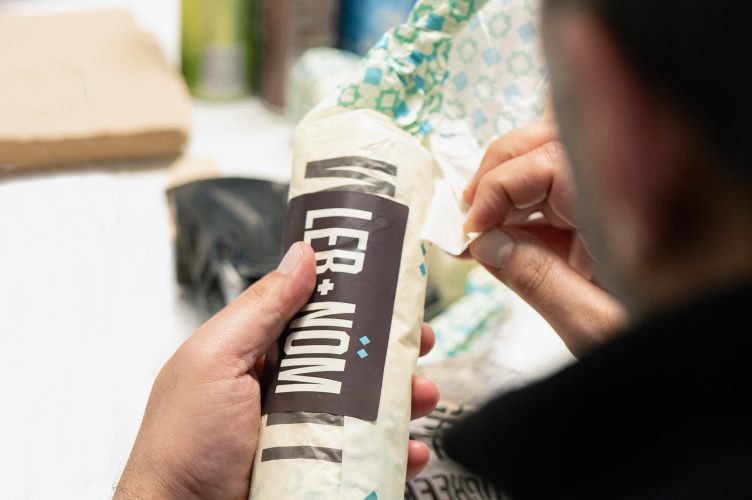
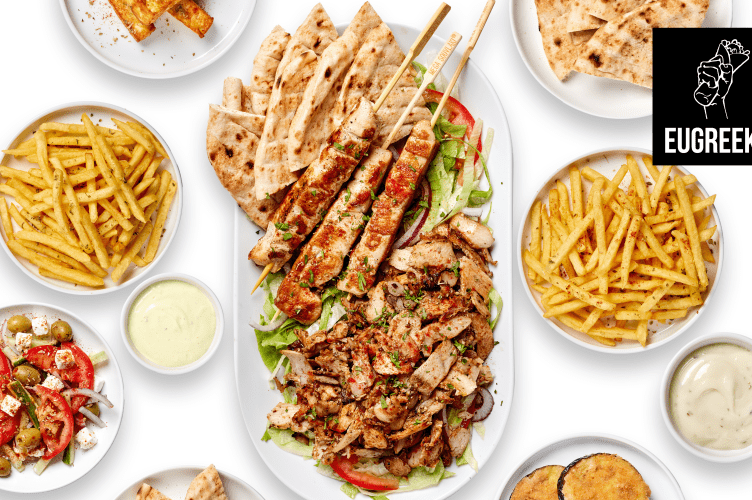
Dish’d runs four proprietary brands: Eugreeka! (Greek), Bao + Bowls (Asian), Leb + Nom (Middle Eastern), and Wingology (fried chicken). All four were recognised among the UK’s Top 50 fastest-growing food and drink franchise brands by What Franchise magazine (Issue 20.3). The network covers 70+ partner kitchens across England, Scotland, and Wales, making it one of the larger ghost kitchen brands operating across multiple UK regions.
What good looks like at day 30
The numbers below are benchmarks, not targets. Every kitchen is different.
Operator data suggests a delivery-only kitchen reaching £8,000-£10,000 per month typically achieves profitability within 6-12 months. That figure is aggregated from operator and platform data, not a Deliveroo-published threshold, but it aligns with what multiple sources report.
At a £22 average order value, 100 orders equals £2,200 in gross revenue. A realistic week-one target for a well-prepared launch is 150-200 orders. A well-executed four-week campaign should be tracking toward 350 or more orders per week by day 30.
The metric that matters most at day 30 is not order volume. It is your rating. An operator with a 4.5-star rating and 20 or more reviews at the end of the boost window is in a stronger position than one with twice the orders and a 3.8. The first has the credibility to hold ranking. The second is starting from a hole.
Two hard floors to know. To stay listed on Deliveroo at all: an FSA food hygiene rating of 2 or above. To grow: a Value Programme score of “Good” or above. Everything else in this article builds toward that second one.
Ready to launch a virtual brand with a team behind you?
The steps above work for any operator prepared to execute them consistently across four weeks while running a kitchen. That is achievable, but it takes focus, and the window does not wait.
If you want to start your own food delivery business from an existing commercial kitchen, Dish’d gives franchisees tested virtual restaurant brands, structured launch training, and ongoing operations support from day one of trading. You do not have to figure out the playbook on your own.
On investment: Dish’d’s total investment range is £10,000-£20,000, with a franchise fee of £3,500. For context, the average franchise investment across all UK sectors is £42,200 (BFA). A Subway franchise starts at approximately £85,000. KFC requires assets of £5 million or more. Virtual brands in the UK launching through a franchise model are a different entry point entirely compared to any of those alternatives.